
Is Hair Transplant Permanent ? Everything You Need To Know Before Getting One
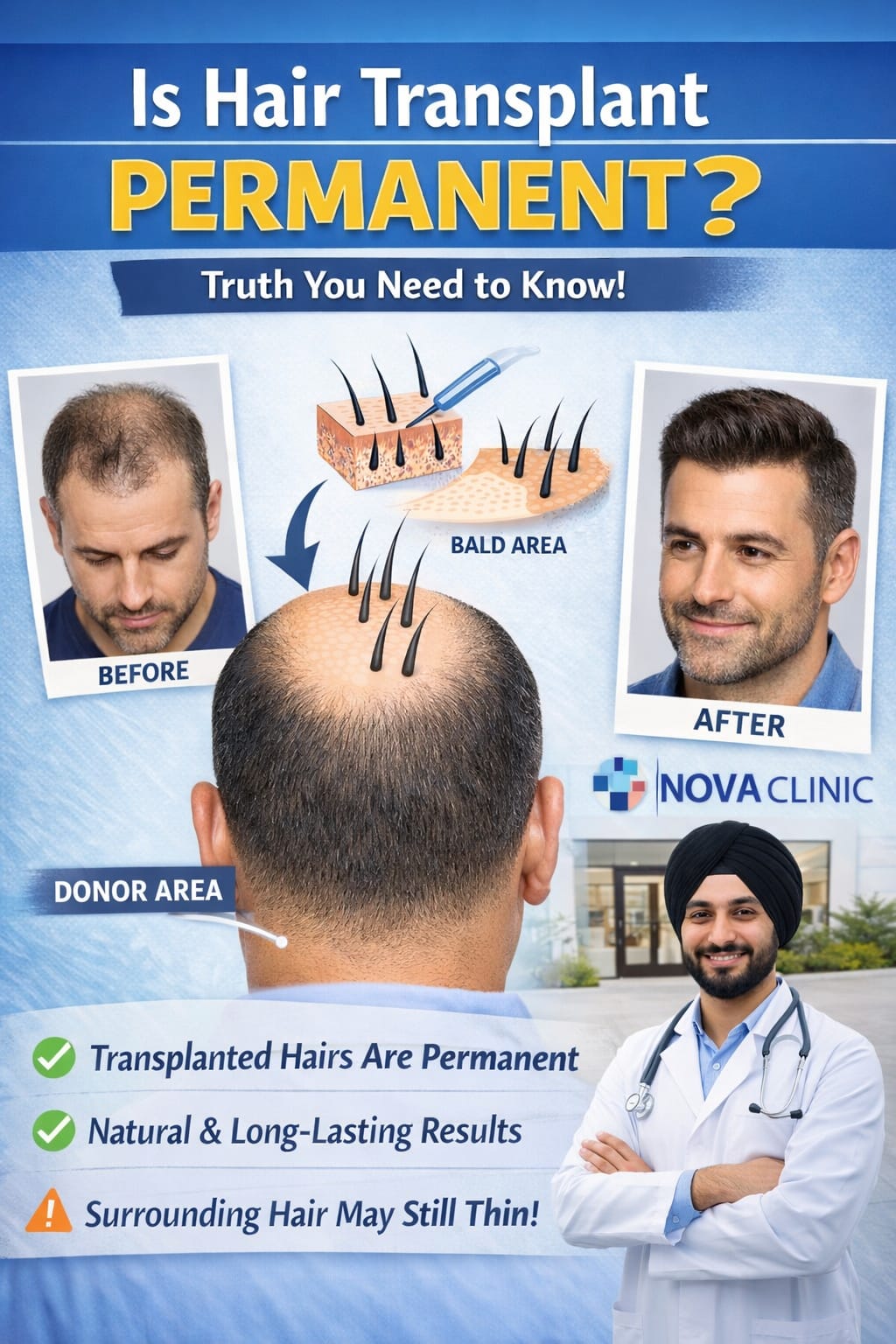
Hair loss is a common concern today, and many people consider a hair transplant as a long-term solution. But one of the most frequently asked questions is: “Is a hair transplant permanent or not?”
Let’s break it down in simple terms so you can understand what to expect.
Is Hair Transplant Permanent?
Yes, a hair transplant is generally considered permanent, but with some conditions.
During the procedure, hair follicles are taken from the donor area (usually the back or sides of the scalp), which are genetically resistant to hair loss. These follicles are then implanted into the bald or thinning areas.
Since these hairs are resistant to the hormone DHT (Dihydrotestosterone), they tend to last a lifetime.
Why Do Some People Think It’s Not Permanent?
This confusion happens because:
Transplanted hair stays, but existing natural hair may continue to fall
If proper care is not taken, results may not look dense over time
People expect instant or unrealistic results
So technically, the transplanted hair is permanent, but overall hair density can change.
How Long Do Hair Transplant Results Last?
- Transplanted hair: Lifetime (permanent)
- Existing hair: May continue thinning over time if not treated
You may need maintenance treatments to protect your non-transplanted hair.
Factors That Affect Hair Transplant Longevity
Doctor’s Skill & Technique A well-performed transplant gives natural and long-lasting results. Donor Area Quality Strong donor hair = better long-term results Post-Procedure Care Following proper instructions is very important Medications Treatments like Minoxidil and Finasteride help maintain results Lifestyle Diet, stress, and health also impact hair quality Do You Need Maintenance After Hair Transplant? Yes, in most cases. Doctors often recommend: Minoxidil (to strengthen hair) Finasteride (to control hair fall)
- Doctor’s Skill & Technique
- A well-performed transplant gives natural and long-lasting results.
- Donor Area Quality
- Strong donor hair = better long-term results
- Post-Procedure Care
- Following proper instructions is very important
- Medications
- Treatments like Minoxidil and Finasteride help maintain results
- Lifestyle
- Diet, stress, and health also impact hair quality
Do You Need Maintenance After Hair Transplant?
Yes, in most cases.
Doctors often recommend:
- Minoxidil (to strengthen hair)
- Finasteride (to control hair fall)
- PRP sessions (optional for better growth)
This helps preserve your existing hair and maintain overall density.
When Will You See Final Results?
When Will You See Final Results?
- 1–3 months: Shedding phase (normal)
- 4–6 months: New growth starts
- 8–12 months: Visible improvement
- 12–15 months: Final results
Final Verdict
A hair transplant is a permanent solution for hair restoration, but it doesn’t stop future hair loss completely.
For the best results:
- Choose an experienced clinic
- Follow proper aftercare
- Continue maintenance if advised