
Hair Transplant Aftercare
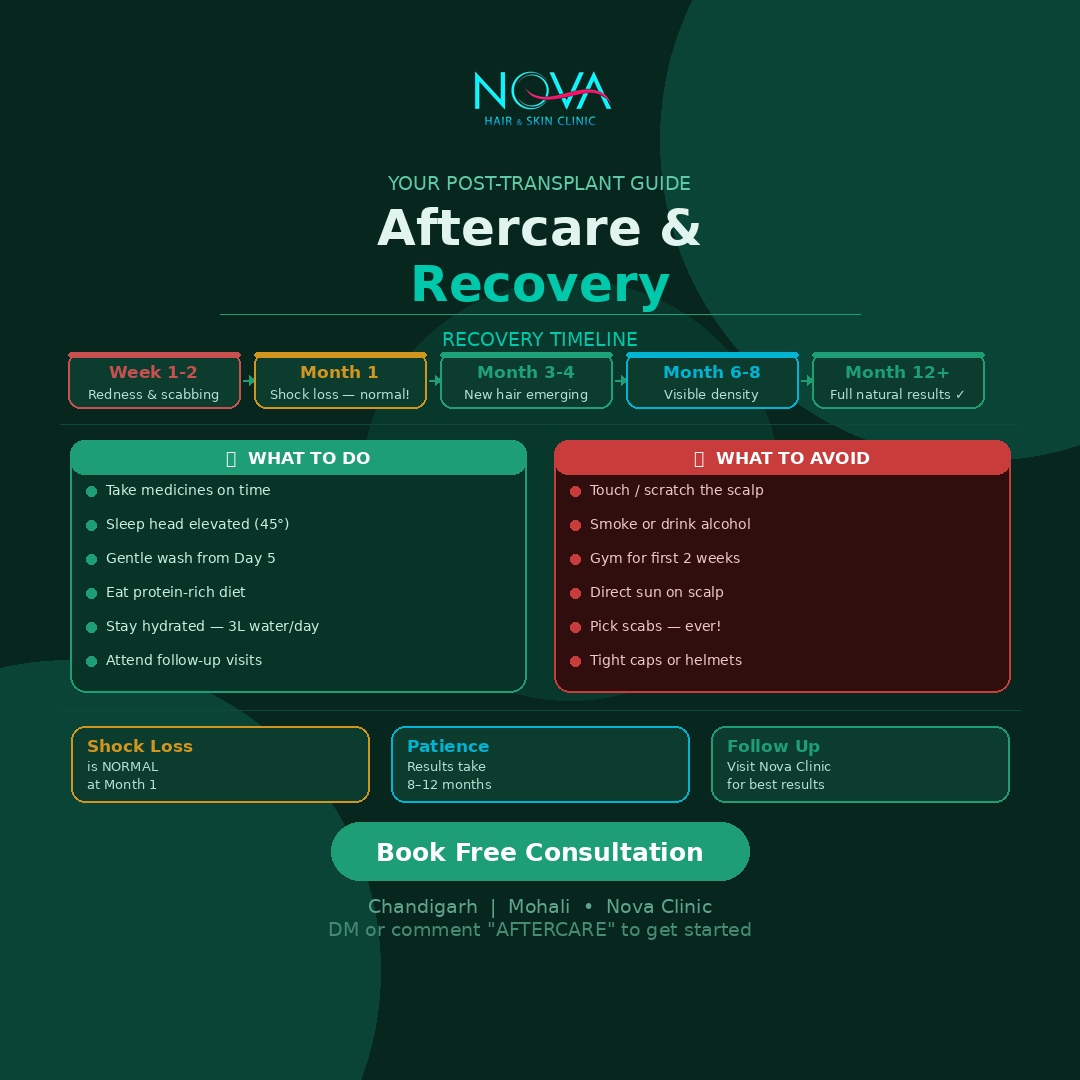
Hair Transplant Aftercare & Recovery: Complete Guide by Nova Clinic
Getting a hair transplant is only half the journey. What you do in the days, weeks, and months after your procedure plays a crucial role in determining the quality and longevity of your results.
At Nova Clinic, Chandigarh/Mohali, we believe that great results come from great care — both inside the clinic and after you leave. This complete aftercare guide will walk you through everything you need to know for a smooth, successful recovery.
Why Aftercare Matters
A hair transplant involves transplanting thousands of delicate hair follicles into new areas of the scalp. These follicles are fragile during the first few weeks and need proper conditions to anchor, survive, and grow. Poor aftercare can lead to:
- Graft failure or poor survival rate
- Infection or scarring
- Patchy or uneven results
- Prolonged healing time
Following the right aftercare routine significantly improves your graft survival rate and the overall density of your final result.
Day-by-Day Recovery Timeline
Day 1–2: Right After the Procedure
- Mild swelling, redness, and tightness around the scalp is completely normal
- Avoid touching, scratching, or rubbing the transplanted area
- Sleep with your head elevated (at a 45-degree angle) to reduce swelling
- Avoid bending forward or lifting heavy objects
- Take prescribed medications on time (antibiotics and anti-inflammatories)
Day 3–5: Swelling Phase
- Swelling may move down to the forehead or around the eyes — this is temporary and normal
- Continue sleeping with your head elevated
- Avoid direct sun exposure on the scalp
- Do not wash your hair without guidance from your doctor
Day 5–10: First Gentle Wash
- Your doctor will guide you on how to gently wash your scalp
- Use only the prescribed mild shampoo
- Pour water gently — never use a shower jet directly on the transplanted area
- Pat dry very gently with a soft towel — never rub
Day 10–14: Scab Shedding
- Small scabs will naturally begin to fall off — this is a good sign
- Do NOT pick or forcefully remove scabs — this can damage grafts
- Continue gentle washing as directed
The "Shock Loss" Phase — Month 1
One of the most common concerns patients have is shock loss — when the transplanted hairs fall out around 2 to 4 weeks after the procedure.
This is completely normal and expected.
The hair falls out, but the follicle beneath the scalp remains alive and active. New hair will begin to grow from these follicles within a few months. Think of it like a tree losing its leaves in winter — the roots are still healthy and growth will resume.
Monthly Recovery Guide
| Timeline | What to Expect |
|---|---|
| Week 1-2 | Redness, scabbing, mild swelling |
| Month 1 | Transplanted hairs begin to shed (shock loss) |
| Month 2-3 | Scalp looks sparse — this is temporary |
| Month 3-4 | New fine hairs start emerging |
| Month 5-6 | Noticeable growth, increasing density |
| Month 8-10 | Significant coverage and thickness |
| Month 12+ | Full, natural results visible |
What to AVOID After a Hair Transplant
First 2 Weeks:
- ❌ No touching, itching, or scratching the scalp
- ❌ No alcohol or smoking (reduces blood flow to follicles)
- ❌ No strenuous exercise or gym workouts
- ❌ No swimming, sauna, or steam room
- ❌ No direct sun exposure without a loose hat
- ❌ No tight caps or helmets that press on the scalp
- ❌ No hair dye or chemical treatments
First 1 Month:
- ❌ No high-impact sports or activities
- ❌ No massaging or rubbing the scalp
- ❌ Avoid dusty or polluted environments
First 3 Months:
- ❌ Avoid harsh shampoos or styling products
- ❌ No perms, straightening, or heat treatments
What You SHOULD Do
- ✅ Take all prescribed medications on time
- ✅ Sleep with head elevated for the first 5 days
- ✅ Follow the gentle washing routine as instructed
- ✅ Eat a protein-rich diet (eggs, dal, chicken, nuts) to support hair growth
- ✅ Stay hydrated — drink at least 2–3 litres of water daily
- ✅ Protect the scalp from direct sunlight (use a loose, breathable hat after 2 weeks)
- ✅ Attend all follow-up appointments at Nova Clinic
- ✅ Be patient — great results take time
Diet & Nutrition for Faster Recovery
What you eat has a direct impact on hair growth and recovery speed:
| Nutrient | Foods | Why It Helps |
|---|---|---|
| Protein | Eggs, lentils, chicken, paneer | Hair is made of keratin — a protein |
| Biotin | Nuts, seeds, sweet potato | Strengthens hair follicles |
| Iron | Spinach, red meat, beans | Improves blood supply to scalp |
| Vitamin C | Citrus fruits, amla | Boosts collagen production |
| Zinc | Pumpkin seeds, chickpeas | Supports tissue repair |
| Omega-3 | Walnuts, flaxseed, fish | Reduces inflammation |
Medications Typically Prescribed After a Hair Transplant
- Antibiotics — to prevent infection (usually for 5–7 days)
- Anti-inflammatory tablets — to reduce swelling
- Minoxidil — sometimes prescribed to support growth (as recommended by your doctor)
- PRP sessions — Nova Clinic may recommend PRP therapy post-transplant to boost graft survival and density
When to Contact Your Doctor
Get in touch with Nova Clinic immediately if you notice:
- Excessive redness or pus at the graft site
- Fever above 38°C
- Unusual or severe pain
- Signs of infection around the donor or recipient area
Long-Term Care: Maintaining Your Results
Once your hair is fully grown (12+ months), maintaining the results is straightforward:
- Wash your hair regularly with a mild, sulphate-free shampoo
- Avoid crash diets or prolonged nutritional deficiencies
- Manage stress levels (high stress can trigger further hair loss in existing hair)
- Consider annual PRP sessions to maintain scalp health
- Follow up with Nova Clinic for long-term monitoring
Conclusion
A successful hair transplant is a partnership between your surgeon's skill and your commitment to aftercare. At Nova Clinic, Chandigarh/Mohali, we provide detailed post-procedure guidance and follow-up support to ensure you get the best possible results.
Have questions about your recovery? Book a free consultation at Nova Clinic today.
Disclaimer: Recovery timelines and instructions may vary based on individual cases. Always follow the specific advice given by your Nova Clinic specialist.