
Hair Loss In Young Men
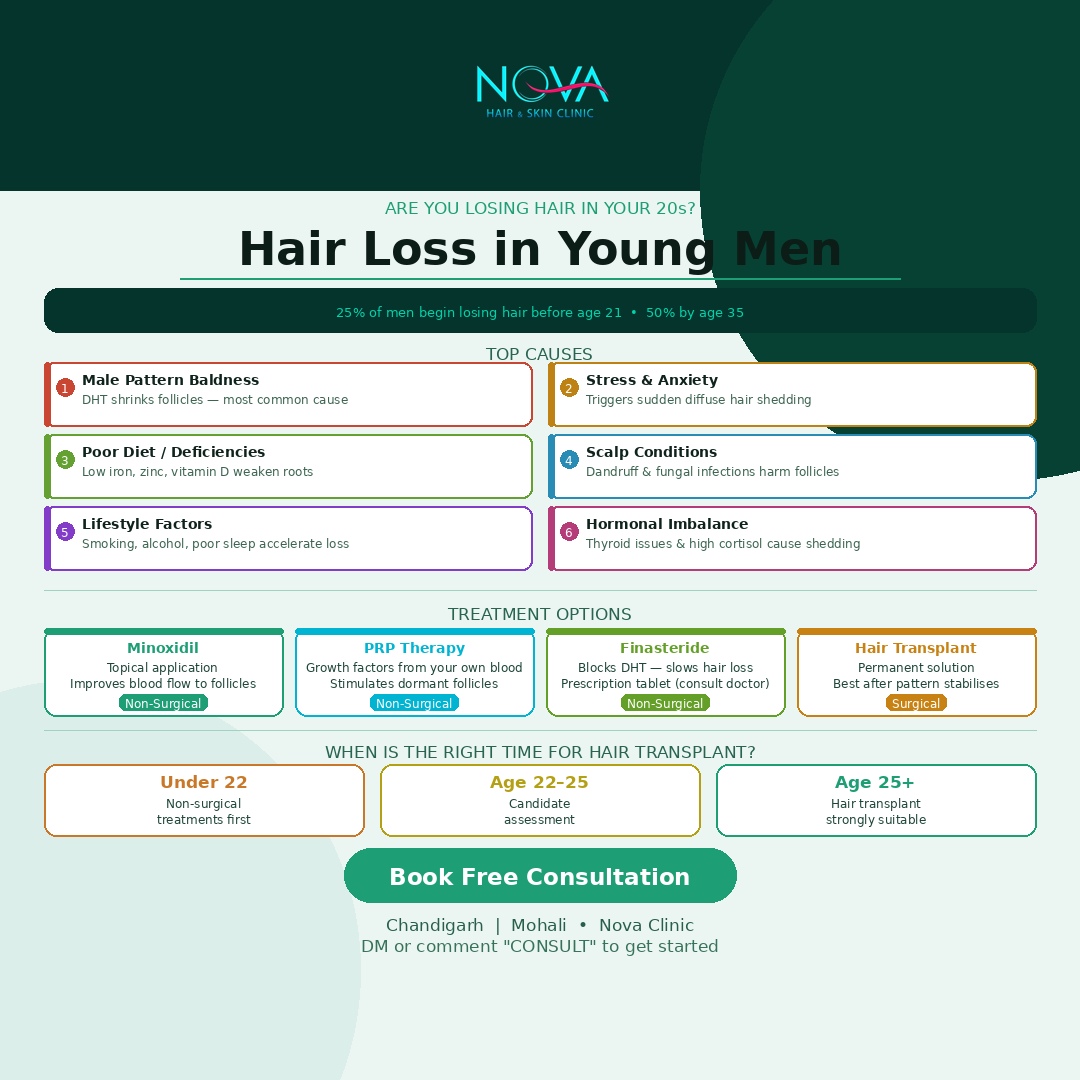
Hair Loss in Young Men: Causes, Signs & Solutions
Losing hair in your 20s or early 30s can feel alarming — and it is more common than most people think. Studies suggest that nearly 25% of men begin experiencing hair loss before the age of 21, and by 35, around half of all men show noticeable thinning.
If you are a young man dealing with a receding hairline, a thinning crown, or excessive hair fall, this guide is for you. At Nova Clinic, Chandigarh/Mohali, we see young patients every day — and the good news is that early action leads to the best results.
Why Are Young Men Losing Hair?
Hair loss in young men is almost always linked to one primary cause, often combined with other contributing factors.
1. Male Pattern Baldness (Androgenic Alopecia)
This is the most common cause — responsible for over 95% of hair loss in men. It is genetic and driven by DHT (Dihydrotestosterone), a hormone derived from testosterone.
DHT causes hair follicles to shrink over time. Each hair cycle becomes shorter, and eventually the follicle stops producing hair altogether. This pattern typically starts at the temples or the crown — and can begin as early as the late teens.
If your father, grandfather, or maternal uncle experienced early hair loss, your risk is significantly higher.
2. Stress (Telogen Effluvium)
Exam pressure, work stress, relationship anxiety, or any major life event can trigger a condition called telogen effluvium — where a large number of hair follicles enter the resting (shedding) phase simultaneously.
This typically results in diffuse shedding across the scalp rather than patterned baldness. The good news: once the stress is managed, hair usually regrows within 3–6 months.
3. Poor Diet & Nutritional Deficiencies
Hair needs protein, iron, biotin, zinc, and vitamins to grow. Young men who skip meals, eat junk food, follow crash diets, or are vegetarian without proper supplementation are at a higher risk of nutritional hair loss.
Common deficiencies linked to hair loss:
- Iron deficiency (anaemia)
- Vitamin D deficiency
- Zinc deficiency
- Protein deficiency
- Biotin deficiency
4. Scalp Conditions
Dandruff (seborrheic dermatitis), fungal infections, or scalp psoriasis can cause inflammation that weakens follicles and accelerates hair loss in young men.
5. Lifestyle Factors
- Smoking — reduces blood flow to hair follicles
- Alcohol — depletes zinc and B vitamins
- Poor sleep — disrupts growth hormone production
- Tight hairstyles — traction alopecia from man buns or tight caps
- Excessive heat styling — weakens hair shafts
6. Hormonal Imbalances
Thyroid disorders, high cortisol levels, or other hormonal issues can accelerate hair loss even in young men.
7. Medications
Certain medications — including those for acne, depression, or blood pressure — list hair loss as a side effect. Always consult your doctor if you suspect your medication is causing hair loss.
Early Warning Signs to Watch Out For
Do not ignore these signs — catching hair loss early gives you more treatment options:
- More hair than usual on your pillow, in the shower, or on your comb
- Receding hairline at the temples
- Thinning at the crown (vertex)
- Visible scalp through the hair
- Hair parting becoming wider
- Hair growing back thinner and finer after each cycle
What Should You Do First?
Step 1: Get a Proper Diagnosis
Do not self-diagnose. Visit a hair specialist at Nova Clinic for a professional scalp analysis. Understanding the root cause of your hair loss determines the right treatment.
Step 2: Blood Tests
Ask your doctor for a blood panel to check for iron, vitamin D, thyroid function, zinc, and hormonal levels. Many cases of early hair loss in young men are linked to correctable deficiencies.
Step 3: Improve Your Lifestyle
Before any medical treatment, these changes can slow hair loss significantly:
- Eat a protein-rich, balanced diet
- Stay hydrated
- Manage stress with exercise, sleep, and mindfulness
- Quit smoking
- Avoid tight hairstyles and heat styling
Treatment Options for Young Men
Non-Surgical Options (Best for Early Stage)
Minoxidil (Topical) Applied directly to the scalp, Minoxidil improves blood flow to follicles and prolongs the hair growth cycle. Available as a liquid or foam. Results take 3–6 months to become visible.
Finasteride (Oral) A prescription tablet that blocks DHT production, slowing or stopping the progression of male pattern baldness. Most effective when started early. Requires consistent, long-term use.
PRP Therapy (Platelet-Rich Plasma) A natural, non-surgical treatment where concentrated growth factors from your own blood are injected into the scalp to stimulate dormant follicles and strengthen existing hair. Highly recommended for early-stage hair loss in young men.
Available at Nova Clinic, Chandigarh/Mohali.
Nutritional Supplements Biotin, iron, vitamin D, zinc, and omega-3 supplements — personalised based on your blood test results.
Surgical Options (For Progressive Loss)
Hair Transplant (FUE / DHI) If hair loss is significant and the pattern has stabilised, a hair transplant can restore lost hair permanently. However, for very young men (under 25), most specialists recommend waiting until the hair loss pattern is more established before proceeding with a transplant.
This is why a proper consultation matters — at Nova Clinic, we always advise the right treatment at the right time.
Should Young Men Consider a Hair Transplant?
Hair transplants for young men are effective — but timing is critical.
Why timing matters:
- A young man's hair loss pattern may not yet be fully established
- Transplanting hair before the pattern settles may result in transplanted patches surrounded by future hair loss areas
- The doctor needs to plan for long-term donor hair management
General guidance:
- Under 22: Focus on non-surgical treatments first
- 22–25: Candidate assessment depending on pattern stability
- 25 and above: Hair transplant is a strong option if loss is established
At Nova Clinic, we create a long-term hair management plan for every young patient — combining non-surgical and surgical options for the best lifetime results.
Conclusion
Hair loss at a young age is not something you have to live with silently. Whether your hair loss is genetic, stress-related, or nutritional, effective solutions exist — and the earlier you start, the better your results will be.
Book a free consultation at Nova Clinic, Chandigarh/Mohali and speak to our specialists about the right treatment plan for your age, pattern, and goals.
Disclaimer: This article is for informational purposes only. Please consult a qualified hair specialist before beginning any treatment.